
Showing posts with label butterfly gardening. Show all posts
Showing posts with label butterfly gardening. Show all posts
Thursday, July 30, 2015
Wednesday, June 26, 2013
Late June Wildflower Blooms ~ 2013
A lot of the late spring - early summer wildflowers are starting to fade (oxeye daisies, milkweed), but there are several more that should be in full bloom within the next month. :)
Here's a sampling of what's blooming now in my gardens and along the roadside...
May Dreams Gardens
clay and limestone
Here's a sampling of what's blooming now in my gardens and along the roadside...
 |
| Echinacea purpurea 'Purple Coneflower' |
 |
| Coreopsis verticillata 'Moonbeam' Not a native Coreopsis, but still a wonderful flower! |
 |
| Larkspur? Not sure of the type or even if it's the right ID. This is one of the plants I picked up at the Master Gardener plant exchange and I've lost the tag and forgot what it was! |
 |
| Asclepias tuberosa 'Butterfly Weed, Milkweed' From my garden, but it's also growing wild along the roadsides and fields. The sad thing is that within the next month (about the time the Monarchs are at their peak), most of the fields will be mowed down or brush hogged. I've grown milkweed for the past ten years and last year (for the first time), I didn't have a single Monarch caterpillar. It saddens me that their numbers have declined so much... |
 |
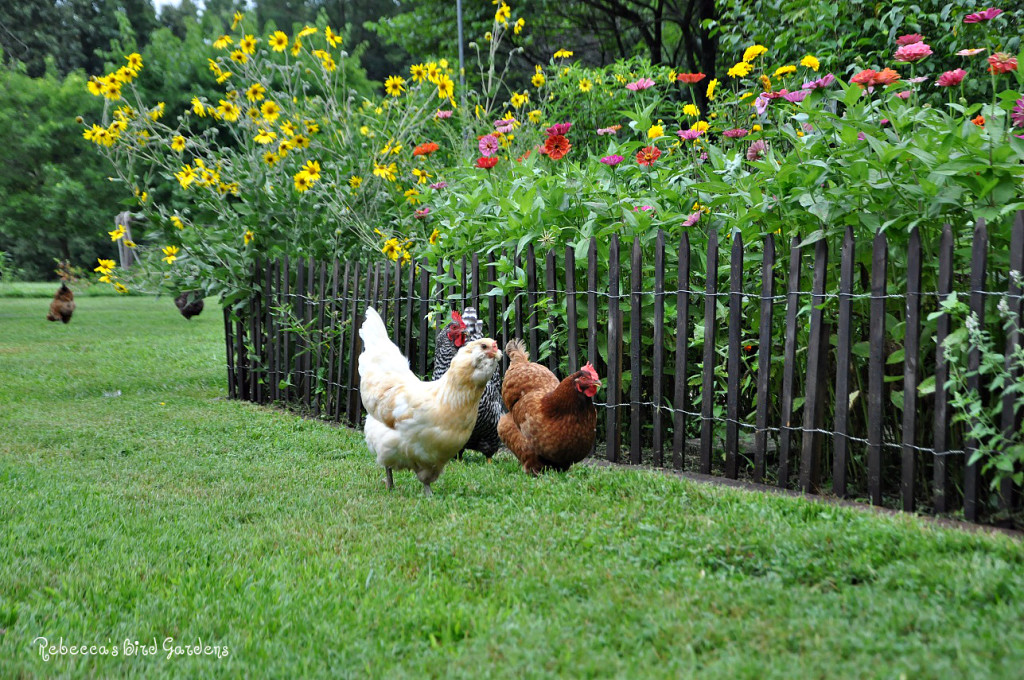
| Datura inoxia 'Angels Trumpet' Native to Mexico and Central America. Not really a perennial in my gardens, but it reseeds easily. This plant is a member of the nightshade family and all parts are extremely toxic. Interesting though, my free range chickens seem to have some sort of innate ability to discern what is tasty and what could be poisonous. This plant is also a host to the tobacco hornworm moth. |
 |
| Verbascum thapsus 'Common Mullien' Common throughout Missouri, but originally one of the first plants introduced from Europe. Actually I thought this was a native Missouri wildflower for years and transplanted it from a field into my garden! |
 |
| Aristolochia tomentosa 'Dutchman's Pipe' Vine native to Missouri, host plant to the Pipevine Swallowtail butterfly. |
 |
| Asclepias syriaca 'Common Milkweed' Along the fence line down the road from my property. Host plant of the Monarch buterfly. |
 |
| Campsis radicans 'Trumpet Vine, Trumpetcreeper' Native to Missouri. The blooms are a favorite of hummingbirds and it's also thicket forming (which also attracts birds as a shelter - protection), This grows wild along my fence line and last season I transplanted some of this vine to a container/trellis outside my bedroom window. It's growing wild and crazy, but I don't think it will bloom until next year. Hopefully I'll get to enjoy watching the hummingbirds eat from a natural food source. |
 |
| Packera aurea 'Golden Ragwort, Squaw weed) Native to Missouri. Growing along the fence line... |
clay and limestone

Monday, November 19, 2012
Autumn Interest ~ Snowberry
Along the fence row across from my property, I found a surprise hidden among the coralberry today... snowberry!

Symphoricarpos albus 'snowberry' is a (thicket-forming) shrub native to Missouri. Similar to its cousin, Symphoricarpos orbiculatus 'coralberry or buckbrush', most birds find the taste of these berries unappetizing. The fruit remains on the shrubs throughout the winter, but can provide an emergency food source for wildlife in the late winter/early spring (when all other natural food sources are deleted). Birds do, however, appreciate the dense thicket the shrubs provide as a shelter from the elements and protection from predators.


The leaves of both coralberry and snowberry are the host plant of the Snowberry Clearwing moth (a frequent visitor to my property). Click on this link for more photos and info... Snowberry Clearwing
I know that most people view this shrub, especially coralberry, as an invasive nuisance, but I love the autumn berries that persist throughout the colorless winter...
Our World Tuesday
Outdoors Wednesday
Nature Notes
Tuesday Around the World
Tuesday, July 24, 2012
Butterfly Festival 2012

 I took along ten very active and friendly pipevine swallowtail caterpillars who seemed to somewhat enjoy being "petted." Some visitors were a little more serious and reluctant that others to touch, but most warmed up to the idea of a squirmy caterpillar crawling on them...
This is such a great educational event for young children, and I enjoyed talking to other volunteers who get as excited as I do over finding a native host plant on your property or spotting a new butterfly visitor to your garden!
For more info on the Butterfly Festival and the Dr. Bill Roston Native Butterfly House, click here: Friends of the Garden


Sunday, June 24, 2012
Native Plants vs. Non-Native Pests
Several years ago I purchased a native Missouri vine, Passiflora incarnata 'Wild Passion Flower,' off craigslist from a fellow gardener that lived in the middle of nowhere in the middle of the Ozarks... This was one of those times when you realize too late that you probably shouldn't have gone alone to a stranger's house, but fortunately I didn't end up in the newspaper headlines and I had finally found the native variety of this vine!


I had searched for the vine at local greenhouses and plant sales, but because it's late to emerge in the spring it was never available to purchase at the annual native plant sale held in April. The vine is sometimes referred to as "Maypop"--because it "pops" up in the garden during the month of May. Actually, it "pops" up everywhere--the roots spread aggressively and it has become somewhat invasive in my garden.
The purple flowers, which appear in June/July are unique, showy and fragrant. Fleshy, egg-shaped, edible fruits called maypops appear in July and mature to a yellowish color in fall. Ripened maypops can be eaten fresh off the vine or made into jelly. The leaves of the vine are also the host plant of the Gulf Fritillary butterfly which is why I searched so fervently for this native vine to add to my butterfly garden.

Here's my dilemma... A few years ago a non-native insect took up residence in my gardens--the infamous Japanese Beetle... These beetles feed on about 300 species of plants, devouring leaves, flowers, and overripe or wounded fruit. They usually feed in groups, starting at the top of a plant and working downward. The beetles are most active on warm, sunny days, and prefer plants that are in direct sunlight. A single beetle does not eat much; it is group feeding by many beetles that results in severe damage. Unfortunately, the most effective way of getting rid of Japanese beetles is to hand pick them. It's time consuming, but it works, especially if you are diligent.
On my property they're everywhere, but they have their favorites: the apple trees, blueberry bushes and blackberry brambles... In my butterfly garden they have taken over my Passion Flower Vine and I've also find a few on the Pawpaw trees.
Here's what I've decided to do...
Even though the passion vine is a native Missouri plant that I went to great lengths to find, I'm going to remove it from my garden. Why?
- I planted it as a host plant of the larva of the Gulf Fritillary butterfly and I have never seen this variety of fritillary in my garden let alone its caterpillar.
- I've tried eating the fruit and it's not appetizing.
- I hate Japanese Beetles and it's attracting them to other plants in my garden.
What do I do in the meantime to control the beetle infestation?--I feed them to the chickens!
Tuesday, June 5, 2012
Snowberry Clearwing
Here's what has invaded my garden! I counted 20 of these beautiful moths on one butterfly bush...

The Snowberry Clearing (Hemaris diffinis) is a common moth throughout Missouri found in forests, brushy fields and frequently turns up in city yards and gardens. It's similar to the Hummingbird Clearwing, but has an identifying black band that crosses the eye and travels down the lateral side of the thorax.

Host plants of the larva include buckbrush or coralberry; which is a native shrub found throughout my property.


The Snowberry Clearing (Hemaris diffinis) is a common moth throughout Missouri found in forests, brushy fields and frequently turns up in city yards and gardens. It's similar to the Hummingbird Clearwing, but has an identifying black band that crosses the eye and travels down the lateral side of the thorax.
Host plants of the larva include buckbrush or coralberry; which is a native shrub found throughout my property.

Tuesday, April 24, 2012
Pawpaws and Zebra Swallowtails...

Asimina triloba 'Pawpaw' is a Missouri native small understory tree or large shrub which typically grows 15-20' tall (sometimes to 30') and occurs in low bottom woods, wooded slopes, ravines and along streams. Cup-shaped, purple flowers appear in spring, and give way to edible, oblong, yellowish green fruits which mature in early autumn to a dark brown. Flavor and fleshy consistency of the sweet-flavored fruits resembles bananas.

 I have three small trees that I purchased four years ago that are still only about a foot tall. They haven't died--they just won't grow...
The leaves of the pawpaw trees are also the host plant of the zebra swallowtail butterfly. Last year I followed one of these fast moving, reclusive butterflies and watched her lay eggs on the leaves of a small tree.--I discovered that I had a mature group of pawpaw trees that just happened to be right next to the chicken coop!
This isn't the first Missouri native plant-tree-flower that I have purchased only to find growing in the wild on my property!

This is the first year that I noticed the flowers on this small tree (thanks to the butterfly) and hopefully I'll spot a caterpillar later this season...


For more info and photography of wildflowers, visit Clay and Limestone's celebration of wildflowers the 4th Wednesday of each month.
Wednesday, October 19, 2011
Female Eastern Tiger Swallowtail Butterfly
Missing the tips of her hindwings...


Perfect--from a different point of view.


Wednesday, October 5, 2011
Tagging Monarchs...
Last Saturday was a perfect day...
The weather was sunny and warm (70+ degrees) and there was a great turn out for one of my favorite events--tagging Monarchs...
The event was organized (in conjunction with Monarch Watch) by one of the gardening organizations I belong to, Friends of the Gardens, and held at the Dr. Bill Roston Native Butterfly House. Monarch Watch is an organization dedicated to creating, conserving and protecting milkweed and monarch habitats..

The North American Monarch is the only insect that migrates south and hibernates. Each year/season, four generations are born. The first three generations live about two to four weeks, but the 4th generation migrates to the warmer climates of Mexico and California then returns to North America in the spring, living a total of six to eight months and traveling close to 2500 miles. Monarch Watch developed the tagging program to associate the location of capture with the point of recovery for each butterfly. The data from these tagged butterflies is used to determine the pathway taken by the migrating Monarchs and also the influence of weather, the survival rate, etc... From my location in Springfield, Missouri, the butterfly will have to travel 1600 miles to their roosting sites on the Oyamel trees in Mexico. Along this journey they will be passing through the scorched dry land of Texas--with very little nectar and water sources available, the survival rate may be lower than previous years...
In addition to the obstacles that the Monarch butterflies face during migration, their entire existence is in danger. The host plant of the larva, milkweed, has been eliminated across much of the farming region of North America. This is a direct result of the use of herbicide-tolerant corn and soybeans planted during the summer breeding times. Additionally-- loss of habitat, decreased nectar sources, lack of protection of their over-wintering sites, logging of the Oyamel trees--all have a direct effect in the decline of the Monarch. This unique insect is so reliant on certain aspects of nature to be in check--an elimination of one element would result in their extinction.


The weather was sunny and warm (70+ degrees) and there was a great turn out for one of my favorite events--tagging Monarchs...
The event was organized (in conjunction with Monarch Watch) by one of the gardening organizations I belong to, Friends of the Gardens, and held at the Dr. Bill Roston Native Butterfly House. Monarch Watch is an organization dedicated to creating, conserving and protecting milkweed and monarch habitats..

In addition to the obstacles that the Monarch butterflies face during migration, their entire existence is in danger. The host plant of the larva, milkweed, has been eliminated across much of the farming region of North America. This is a direct result of the use of herbicide-tolerant corn and soybeans planted during the summer breeding times. Additionally-- loss of habitat, decreased nectar sources, lack of protection of their over-wintering sites, logging of the Oyamel trees--all have a direct effect in the decline of the Monarch. This unique insect is so reliant on certain aspects of nature to be in check--an elimination of one element would result in their extinction.
The morning of the event the Monarchs were caught or collected, carefully placed in envelopes and chilled (in a cooler) until the event...

Each person tagging the Monarch recorded the tag code, whether the butterfly was collected in the wild or reared/raised by a volunteer and the sex of the butterfly.

The Male Monarch has easily identifiable hind-wing spots...
The tag is placed in the "mitten-shaped" cell on the underside of the hind-wing.


The butterflies were then allowed to "warm-up" before being released.
Free at last-- to began their long flight south!


Monarch Waystation--Habitat certified by Monarch Watch that provides an adequate number of milkweed and nectar sources...

What a perfect day--to begin a long journey...
For more info on protecting Monarchs including: creating Monarch Waystations, milkweed and tagging programs--visit Monarch Watch.
Subscribe to:
Posts (Atom)
LinkWithin
